
Canvas Bag Manufacturing & Production

One of the most special ways to combine nature, sustainability, and style is undoubtedly with canvas bags. With the decrease in plastic use and the increase in environmental awareness, canvas bags are experiencing a "golden age" in both the fashion world and corporate marketing.
In this comprehensive guide, we open the doors to the world of Canvas Bag Manufacturing, from manufacturing processes to critical details in raw material selection. If you want to create a high-quality, durable, and aesthetically pleasing collection for your brand, this guide will help you determine your production strategy.
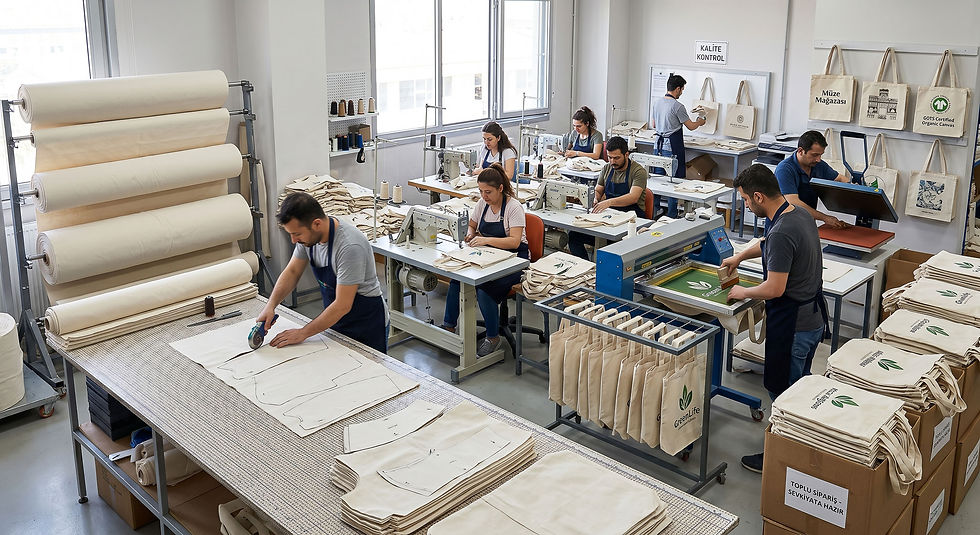
1. Characteristics and Production Advantages: Canvas Bag Manufacturing
When it comes to canvas bag production, the first things that come to mind are the fabric's unique texture and its sheer durability. Canvas is a high-end segment of the "tote bag" category, typically made from tightly interwoven linen or thick cotton yarns.
The primary reasons canvas is the preferred choice in manufacturing include:
High Tensile Strength: Canvas is one of the natural fabrics with the highest weight-bearing capacity. This makes it ideal for both daily use and heavy-duty shopping bags.
Natural and Breathable Structure: Unlike plastic-derived bags, 100% cotton canvas is natural and recyclable.
Print Compatibility: The porous nature of canvas perfectly holds digital, screen, or embroidery prints. Colors appear more vibrant, and logos look more permanent.
Aesthetic Versatility: The ability to produce canvas in various weights (GSM or Ounce values) allows for a wide range of models—from thin, elegant beach bags to rigid, upright laptop cases.
The quality of the fabric used in production (typically ranging from 220g to 450g) is the most critical factor determining both the cost and the lifespan of the final product.
2. The Canvas Bag Manufacturing Process: Step-by-Step Perfection
A professional canvas bag manufacturer follows a strict discipline to transform raw material into a work of art. A standard production line generally consists of the following stages:
Model and Pattern Preparation
Everything starts with a blueprint. The dimensions, gusset width, handle length, and interior pocket details are drafted into a technical drawing. Digital or cardboard patterns ensure the fabric is cut with minimum waste.
Cutting and Preparation
Canvas rolls are layered on spreading tables and cut according to the patterns using laser cutters or professional vertical knives. At this stage, symmetry and precision are vital for a smooth sewing process.
Sewing and Assembly
This is where craftsmanship shines. Because canvas is a thick material, industrial-grade sewing machines with high needle power are used. To increase carrying capacity, "cross-stitching" (X-stitch) is applied where the handles meet the body.
Quality Control and Packaging
Thread remnants are trimmed, and accessories like zippers or snap buttons are tested. After passing the quality control personnel's approval, every bag is ironed and sent to the packaging unit.
3. Sustainable Fashion and Natural Tote Bag Production
In 2026, the biggest trend in the textile industry is reducing the "Ecological Footprint." Natural tote bag production is the locomotive of this trend. The banning or taxing of plastic bags has shifted consumers toward reusable products.
Material Type | Environmental Impact | Lifespan |
Traditional Cotton Canvas | Moderate (High water consumption) | High (Lasts for years) |
Organic Canvas (GOTS Certified) | Low (No chemical pesticides) | High |
Recycled Canvas | Very Low (Made from waste yarns) | Moderate/High |
Environmental consciousness also extends to the choice of dyes. Water-based inks are harmless to human health and biodegradable. For a manufacturer, holding sustainability certifications like OEKO-TEX or GOTS provides a significant competitive advantage, especially in export markets.
4. Wholesale Canvas Bags and Customization Techniques
For corporate firms, canvas bags are more than just transport tools; they are part of the emotional bond they build with their customers. Customization options in wholesale canvas bag orders reflect the brand's soul:
Screen Printing: The most economical and permanent method for logos with one or a few colors.
Digital (DTF/DTG) Printing: Allows for high-resolution, multi-colored, or photographic designs to be transferred exactly onto the fabric.
Embroidery: For brands seeking a premium look, the logo is stitched into the fabric. This is indispensable for beach bags and boutique collections.
Leather and Accessory Details: Combining the raw texture of canvas with leather handles, metal buckles, or custom labels elevates the product from "promotional" to "retail" grade.
5. Usage Areas and Marketing Strategy
A well-designed canvas bag ensures your advertisement is seen everywhere. Today, canvas bags are found in every aspect of life:
Events and Conferences: Presenting brochures and gifts to participants in a stylish canvas bag enhances the perceived quality of the event.
E-commerce Packaging: Luxury brands include canvas bags inside shipping boxes as a protective sleeve and a gesture to the customer.
Beach and Daily Fashion: With its large internal volume and summery texture, it is the most preferred accessory along the coastlines.
Bookstores and Art Galleries: Having become a cultural symbol, canvas bags provide an additional revenue stream and brand identity for these institutions.
Professional Tip: If you are running a marketing campaign, instead of just printing a giant logo, add an artistic illustration that people will enjoy carrying in their daily lives, with a small brand signature in the corner. This increases the bag's usage rate by 70%.
Canvas bag manufacturing is a process where technical expertise meets creativity and respect for nature. With the right fabric weight, durable stitching techniques, and an impressive design, you can turn your brand’s message into a product that will be carried for years.
In the 2026 textile world, staying relevant isn't just about "producing"—it’s about "producing with quality and sustainability." If you are planning a custom canvas collection for your brand, always verify sample quality and material certifications when choosing your production partner. Every stitch taken with the right steps strengthens the future of your brand.


Comments